
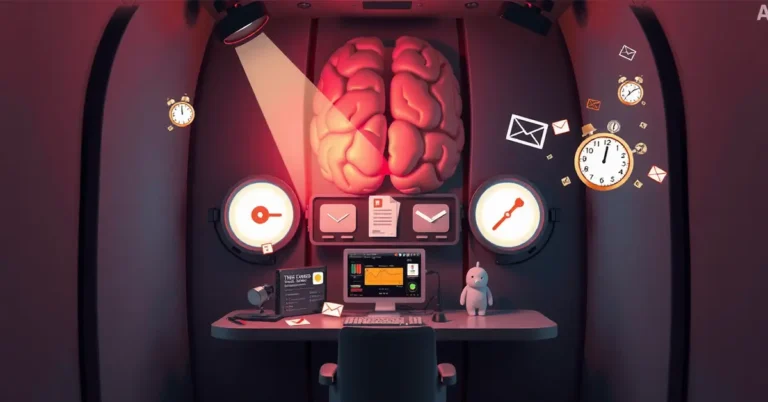
No matter if you work in a busy office, study under pressure, or care for a family, daily life often brings endless to-do lists. Tasks build up quickly, and the urge to get more done never really goes away.
To cope, many people try to become productivity superstars. The most common strategy is multitasking. It feels practical, efficient, and even necessary. Doing more than one thing at a time seems like the only way to keep up.
But this idea is actually misleading. Consider asking yourself,
“When was the last time multitasking genuinely saved you time?”
Reflecting on this question can help reveal the hidden inefficiencies that multitasking often conceals.
Decades of research in neuroscience and cognitive psychology show that multitasking does not increase productivity. In fact, it consistently does the opposite. What feels like efficiency is often a slow drain on time, energy, and mental performance.
Realizing this can change the way you work, think, and manage your attention.
In this article, we’ll look at why multitasking feels productive, what really happens in the brain, and how it quietly lowers true productivity.
- Multitasking does not increase productivity. It replaces focused work with rapid task switching, which slows progress and increases errors.
- The brain has a cognitive bottleneck. Only one demanding task can receive focused attention at a time.
- Task switching carries hidden costs. Even brief switches require time and mental effort to reorient, resulting in significant productivity loss throughout the day.
- Working memory is limited. Frequent switching leaves behind attentional residue, slowing and degrading thinking.
- Multitasking prevents deep focus. Without sustained attention, creativity, efficiency, and long-term learning suffer.
- Divided attention lowers quality. Important details are missed, and the work becomes shallower and error-prone.
- Multitasking increases mental stress. Constant interruptions drain energy, reduce motivation, and make tasks feel harder than they are.
- Feeling busy is not the same as being productive. True productivity comes from sustained focus and meaningful progress, not constant activity.
What is Productivity?
Before we call multitasking a productivity pitfall, it helps to understand what productivity actually means.
At its core, productivity is about how efficiently you turn your efforts and resources into results.
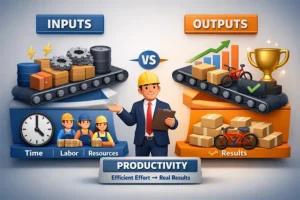
 Think of yourself as the manager of a production company. You set goals for the month, like how many products to make and what quality they should be. These goals define what you expect to achieve.
But output alone does not tell the full story. You also need to consider the inputs involved. How much raw material is required? How many workers are needed? How much time and energy will the process consume?
If your company hits its targets using less material, fewer workers, and less time, productivity is high. If it takes more resources to get the same results, productivity is lower.
So, productivity isn’t about doing more things at once. It’s about getting real results with as little wasted effort as possible.
Let’s take a closer look at what you expect from multitasking and what it actually provides.
The Productivity You Expect from a Task
Now apply this idea to your daily work. Take studying as an example.
- Outputs: Understanding concepts clearly and completing two lessons.
- Inputs: Your time and mental energy.
Of course, you want to learn what you need using as little time and mental effort as possible. That’s what makes a task productive. When something feels hard or takes too long, it’s natural to look for ways to do it faster.
That’s when multitasking starts to seem appealing.
What do You Expect from Multitasking?
Time is one of our most valuable resources. Once it’s gone, we can’t get it back. So, it’s natural to want to save as much time as possible.
For many people, saving time feels even more important than saving mental energy. Having more time seems to mean getting more done, making more progress, and feeling more in control of a busy day.
That’s why multitasking seems so appealing. The idea is simple: if you do two or more things at once, each should take less time than doing them one after the other. You also expect the quality to stay the same.
But research shows a very different picture.
To see why multitasking doesn’t deliver these benefits, we need to look at how the brain actually works.
Brain Barriers for Multitasking
Multitasking does not work the way most people imagine it does. Many of us picture the brain handling multiple tasks in parallel, smoothly processing each one simultaneously. In this view, attention feels unlimited, and performance seems unaffected.
But in reality, the brain has clear limits. These limits make it impossible to focus deeply on more than one thing at a time. Knowing this helps explain why multitasking actually hurts productivity instead of helping it.
There are 2 limitations.
- Cognitive bottleneck
- Limited working memory
The cognitive bottleneck
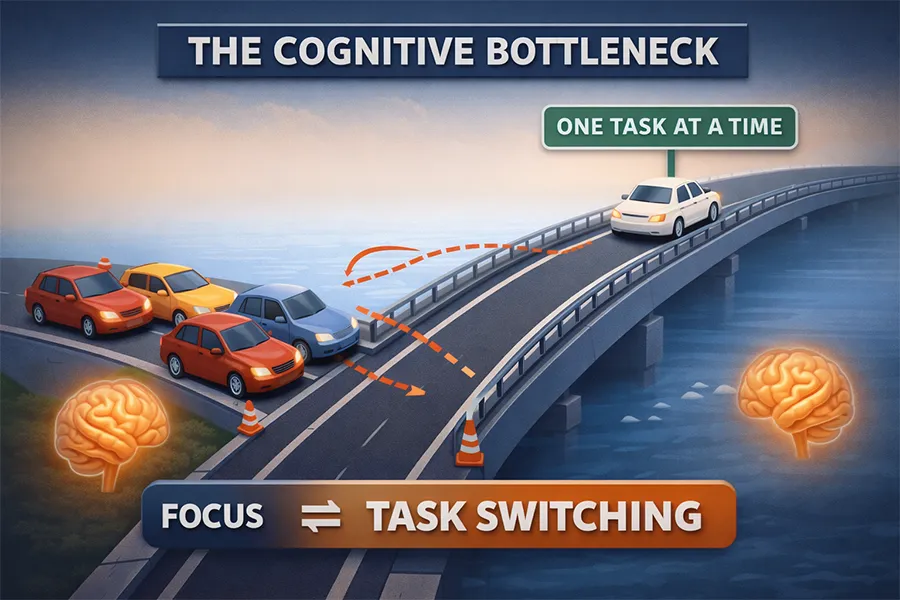
 Focused attention can only handle one task at a time. This isn’t about habit or willpower—it’s how the brain is built. Think of focus like a one-lane road: only one car can go through at a time. There’s no extra lane or shortcut.
Any task that requires conscious thought must pass through this pathway. When you try to handle multiple such tasks, the brain has no choice but to switch the focus between them. This process is known as “task-switching.“
So when you think you’re multitasking, you’re really just switching your focus quickly from one thing to another. Since focus can’t be split, every switch has a cost.
Brain imaging studies using functional MRI clearly show this bottleneck. When people attempt multitasking, patterns of brain activity toggle between task-related networks. Reaction times slow, errors increase, and mental efficiency drops. The brain behaves like an overworked processor constantly jumping between programs.
This reality shows that doing two demanding tasks at once isn’t possible. In practice, multitasking often takes as much time as doing tasks one at a time, and the results are usually worse.
Limited working memory
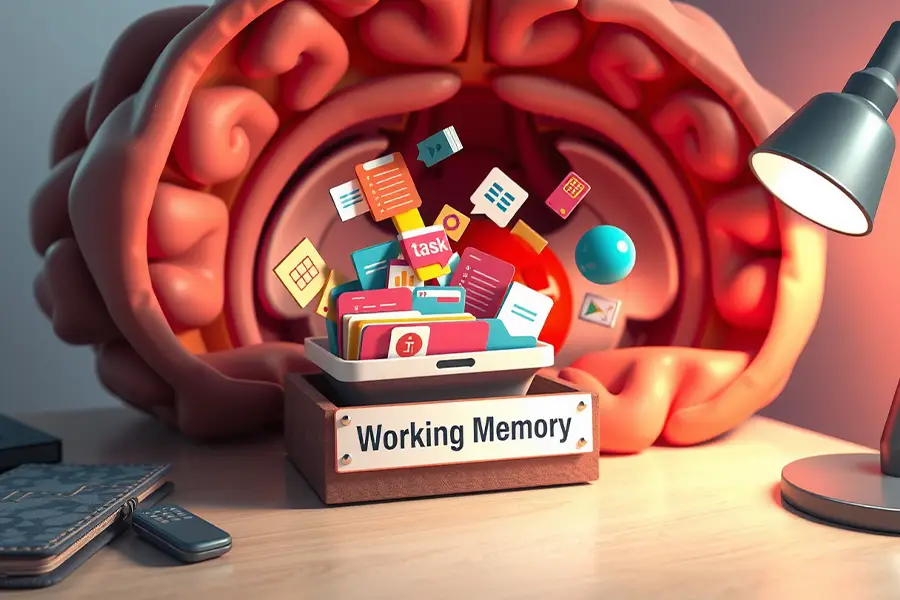
Focus shapes working memory. When you focus on a task, your working memory fills with information related to that task: details, goals, rules, and context.
When your focus shifts to another task, this information cannot stay. Working memory must clear space and load new, task-relevant information.
This constant clearing and refilling happens because working memory is very limited. It can’t hold more than a few items at once.
When you switch tasks often, this process gets less efficient. Some information from the last task persists instead of clearing. These leftovers get in the way of the new task, slowing you down and increasing your likelihood of mistakes.
To better understand these lingering effects, try a quick experiment: after switching tasks, take 30 seconds to jot down any thoughts or details from the previous task that still occupy your mind. This simple exercise will help you identify the mental residue left behind and how it disrupts your focus on the new task.
This effect is known as “attention residue.”
Because of attention residue, your brain never fully commits to the task in front of you. Your mental resources aren’t really divided—your working memory is just cluttered.
So, how do these limitations translate into lower productivity during multitasking?
How Multitasking Reduces Productivity
Multitasking reduces productivity in several predictable ways. Research in cognitive psychology consistently shows four major effects.
- Divided attention lowers task quality:
When attention is split, fewer mental resources are available for each task. This leads to shallow thinking, missed details, and more errors, even when tasks feel familiar. - Task switching adds hidden time costs:
Every switch between tasks requires the brain to disengage, reorient, and reload information. These small delays accumulate, increasing total time spent while reducing accuracy. - Multitasking blocks deep focus:
Deep focus, often called a flow state, requires sustained attention. Frequent interruptions prevent this state from forming, making work less creative, less efficient, and more mentally exhausting. - Multitasking increases mental stress:
Constantly juggling tasks keeps the brain in a heightened state of alert. This raises stress levels, accelerates mental fatigue, and makes even simple tasks feel harder than they should.
Let’s break this down further.
Disadvantages of divided attention
Attention can be understood as general awareness within a specific context. Unlike focus, attention can expand to encompass multiple streams of information at once.
During multitasking, this widened attention must constantly monitor several tasks while focus jumps back and forth between them.
Attention plays a supporting role for focus. It gathers background details, cues, and situational information that support focused thinking. When attention is spread across multiple tasks, this support system weakens.
As a result, your brain is more likely to make mistakes, process things only on the surface, and be less creative. Important details get missed, connections are overlooked, and the quality of your work drops.
For example, if you write an important client email while listening to a meeting, you’ll probably end up with a less clear message and miss key points from the discussion.
Laboratory studies show the same pattern. When people are required to alternate between even simple tasks, error rates rise and reaction times slow compared to when they complete tasks one at a time.
One neuroscientist compared this to asking a single pianist to play two different songs on two pianos at once. Both performances will suffer.
Disadvantages of task switching
Task switching is a process your brain uses to cope with competing demands. While the brain can switch between tasks, doing so comes with real productivity costs.
When you broaden your attention across two or more tasks, you signal to the brain that multiple targets are competing for focus. As a result, attention becomes unstable. Hence, whenever focus weakens, it rapidly shifts to the alternative task, often automatically and without conscious control.
The cost of task switching comes as 2 forms.
- Accumulated delays
- Depletion of mental energy
1. Accumulated delays
Every time a task switch occurs, the brain must reorient itself.
This involves:
- shifting context,
- rebuilding task goals, and refilling working memory with relevant information.
Each switch might only take a split second for simple tasks. But when you switch over and over, these tiny delays add up. By the end of the day, they can lead to significant productivity losses.
For tasks with high cognitive demand, such as studying, problem-solving, or analysis, reorientation takes much longer. The brain needs time to rebuild context and regain depth of understanding.
Research from the University of California, Irvine, found that after an interruption, workers take an average of 23 minutes to fully return to their original task. During this reorientation period, progress is slow or stalled.
Think about how often you get interrupted in a normal day—emails, messages, meetings, switching documents, and random questions. All these interruptions add up, explaining why hours seem to disappear.
Some analyses estimate that the average digital worker switches between apps and websites over 1,000 times per day, losing roughly 4 hours per week simply re-focusing after task switches. That amounts to several full workweeks lost each year to task switching alone.
2. Depletion of mental energy
Beyond time loss, frequent task switching drains your mental energy.
Getting back into a task means letting go of old information, loading new details, and rebuilding connections in your working memory. Each switch uses up mental resources. When this happens repeatedly, it becomes less efficient.
Over time, working memory becomes cluttered with leftover fragments from previous tasks. This buildup of attention residue reduces the mental space available for the task at hand and weakens memory retention.
Most people know this feeling. After replying to an unrelated email, you go back to a complex task and wonder, “Where was I?” Important details seem far away, and it’s hard to concentrate.
Because attention residue keeps you from fully engaging, your performance drops. You make more mistakes, your thinking gets shallow, and tasks feel more tiring than they should. It’s like having too many browser tabs open—everything slows down.
Over time, this scattered way of working steadily drains your mental energy, leading to increased fatigue and stress.
Disadvantages of shallow focus
Focus builds over time. The longer you stay with one task, the deeper your concentration gets. This steady focus lets your brain enter a state of deep engagement, often called flow.
Frequent task switching disrupts this process. Every interruption resets your attention, making it harder to reach deep focus or get into a flow state.
Deep focus enables efficient work, creative thinking, reduced mental friction, and stronger long-term memory formation. When deep focus is absent, the opposite occurs. Tasks take longer, effort feels heavier, and your productivity drops.
Learning and memory are especially affected by multitasking. When you study or try to absorb information in meetings, splitting your attention makes it harder for your brain to store what you learn. Even quick distractions, like checking messages, hurt the quality of your learning.
Studies show that students who switch between social media and coursework remember less and do worse on exams than those who focus on one thing at a time. Building strong memories depends on steady focus. When your attention is scattered, your memory becomes weak and fragile.
Without deep focus, your work stays on the surface. You might still make progress, but it’s slower, less efficient, and you learn less from your efforts.
Disadvantages of stress created by multitasking
Stress and job satisfaction are often overlooked in discussions of multitasking. Constantly juggling tasks keeps your brain on high alert, making your day feel chaotic and mentally tiring.
Many people say they feel drained, restless, or mentally exhausted on days filled with interruptions and frequent task switches. This isn’t just a feeling—it’s a sign of real mental strain.
As you get more mentally tired, tasks start to feel harder and take longer than they really should. Your motivation drops, you lose interest, and even important work can start to feel unpleasant.
This kind of stress and exhaustion leads to scattered effort, less engagement, and lower productivity. Instead of making steady progress, your work gets broken up and reactive, which is the opposite of what multitasking is supposed to help with.
Why Multitasking Feels Productive
If multitasking reduces productivity so reliably, why does it feel effective?
The answer is in how the brain sees activity. When you switch between tasks, you’re always starting something new, reacting to things, and making quick choices. This makes you feel busy and engaged, so it seems like you’re making progress.
Each time you switch tasks, your brain gets a small hit of dopamine, the chemical that makes you feel rewarded. New emails, messages, or quick wins feel new and complete, even if you haven’t finished anything important. The brain confuses this feeling for real productivity.
Multitasking also hides how inefficient things really are. Since your attention is always shifting, it’s harder to notice slow progress, more mistakes, or lower quality. The day feels busy, but you don’t get much done.
In short, multitasking feels productive because it keeps your brain busy and stimulated. But being busy isn’t the same as being effective. Productivity is about results, not just feeling active.
What to do Instead of Multitasking
If multitasking doesn’t help you get more done, try working in a way that fits how your brain works best. You’ll get more done if you protect your attention and focus on one thing at a time. Finish a task before starting another, and give yourself a moment to reset between tasks.
You can also boost your productivity by doing similar tasks together or cutting down on interruptions. Real productivity comes from keeping your focus, not just staying busy.
Conclusion
Multitasking promises to make you more efficient, but it does the opposite. It makes you feel busy and engaged, but it quietly gets in the way of real productivity.
Since attention is limited, working memory is fragile, and switching tasks is costly, your brain can’t handle several demanding tasks at once. This leads to slower progress, lower quality, more mistakes, and more mental fatigue.
Real productivity isn’t about doing lots of things at once. It’s about focusing your attention, staying on task, and finishing meaningful work clearly and efficiently.
Multitasking keeps your mind busy. Focus is what actually helps you make progress.
References
Frequently Asked Questions (FAQs)

 Think of yourself as the manager of a production company. You set goals for the month, like how many products to make and what quality they should be. These goals define what you expect to achieve.
 Focused attention can only handle one task at a time. This isn’t about habit or willpower—it’s how the brain is built. Think of focus like a one-lane road: only one car can go through at a time. There’s no extra lane or shortcut.
 Focus shapes working memory. When you focus on a task, your working memory fills with information related to that task: details, goals, rules, and context.
 Attention can be understood as general awareness within a specific context. Unlike focus, attention can expand to encompass multiple streams of information at once.
 Task switching is a process your brain uses to cope with competing demands. While the brain can switch between tasks, doing so comes with real productivity costs.
 Many people say they feel drained, restless, or mentally exhausted on days filled with interruptions and frequent task switches. This isn’t just a feeling—it’s a sign of real mental strain.
 If multitasking doesn’t help you get more done, try working in a way that fits how your brain works best. You’ll get more done if you protect your attention and focus on one thing at a time. Finish a task before starting another, and give yourself a moment to reset between tasks.