
Many people see multitasking as a special skill of highly productive individuals. Imagine this: a hardworking employee sits at their desk, juggling emails, phone calls, and a project deadline all at once. In the midst of this whirlwind, they miss a critical detail in a report, leading to a costly mistake.
This belief that multitasking equates to high productivity is often supported when teachers, bosses, or family members praise those who seem to “do many things at once.”
Modern life is busy. Deadlines, notifications, and constant demands make us feel we have to handle multiple tasks at once.
This makes us think we’re really doing a bunch of things at once. But science shows we’re not.
According to a 2009 study by Stanford University researchers, heavy multitaskers performed worse on cognitive tests than their less-distracted peers, indicating that the human brain is not wired for true multitasking in tasks that require active attention.
The way our brains work, it’s actually impossible to truly multitask. In this article, we’ll look at why humans can’t truly multitask.
- The human brain is not built to multitask, either structurally or functionally.
- The brain can’t split its focus well and has only a limited working memory.
- What we think of as multitasking is really just switching between tasks quickly.
- Switching between tasks makes us less efficient and hurts our overall performance.
Definition of Multitasking
Multitasking means doing more than one thing at the same time. For example, your phone might play music while you scroll through social media. Both happen at once without stopping each other.
Can the Human Brain Process Information in Parallel?
Yes, the human brain can handle some things at the same time, but not when it comes to tasks we do consciously.
Your brain does many things automatically. Breathing, noticing your surroundings, and watching for danger all happen in the background while you work. You don’t have to think about them—they happen on their own.
But conscious tasks are different. For example, what happens if you try to read an article while listening to a podcast?
It might seem like you’re doing both at once, but if you notice closely, your focus jumps back and forth between reading and listening. You’re not really doing both at the same time—you’re just switching between them.
To see why this happens, let’s look at what the brain does when it tries to handle two conscious tasks at once.
What Happens Inside Your Brain When You Multitask?
Different parts of your brain handle different skills and functions. When you focus on a task, certain parts of your brain related to attention and focus become active. This focus helps you be creative, work efficiently, and remember things. In short, focus lets your brain do its best work.
You can let your unconscious mind take over a task only when it’s fully automatic, like walking or jogging. These don’t need active thought anymore.
But tasks that need thinking, understanding, or making decisions have to go through your brain’s focus system.
Now, consider what multitasking really means. To truly multitask, you’d have to give your full attention to two tasks at the same time.
That’s where the problem starts.
Instead of focusing on both tasks at once, your brain jumps back and forth between them. This constant shifting is called “task-switching.“

Imagine a single spotlight on a dark stage. It can shine on one actor at a time and move quickly between them, but it can’t light up two places at once. The stage may look busy, but the light never splits.
So why can’t the brain focus on two tasks at once?
To answer that, we need to look at the limits of attention and working memory.
Why Can’t the Brain Handle Multitasking?
The short answer is that the human brain didn’t evolve to multitask.
There’s no special part of the brain that lets us split our focus. Instead, our brains are made to concentrate on one demanding task at a time.
Focus Can’t Be Divided
When you work on something, focus helps you think about it and notice details. Without focus, it’s hard to think deeply. Focus uses the brain’s attention pathway, but there’s only one available at a time.
Anything that needs active thinking has to go through this pathway. It’s like a narrow bridge—only one car can cross at a time. There’s no second lane.
This is called the brain’s “bottleneck.” It’s a physical limit that serves as a strategic design feature of our brain, safeguarding deep, focused thinking by allowing only one ‘car’ across the ‘bridge’ at a time. This design ensures that when we pay attention to a new task, our brain can fully let go of the current one, ultimately protecting the quality of our mental processing.
If you want to do two things at once, one must be automatic and handled by your unconscious mind, while your focus system handles the other task. The unconscious mind can only manage tasks like walking or typing familiar words.
When both tasks need active thinking, your brain can only switch back and forth between them. This is called “task-switching.“
Which leads to the following question:
Even if we can’t split our focus, is it possible to get so good at switching tasks quickly that it’s better than doing one thing at a time?
That’s where another limit comes in: working memory.
Working Memory Is Limited
When you focus on a task, your working memory fills up with facts, steps, goals, and connections related to that task.
When you switch to a new task, your working memory has to clear out the old information and bring in new details. Working memory is limited, so it can’t hold the details of two demanding tasks at once. Focus is what lets working memory fill up. When your focus moves away, that information fades quickly.
Think of working memory like a small desk. You can spread out papers for one project and work well. If you switch projects, you have to clear the desk and set out new papers. When you go back to the first project, you need to set everything up again.
This rebuilding takes effort. Reloading information into working memory after switching is a part of refocusing. Each time you refocus, you lose a bit of time and mental energy.
Task-Switching Is Not Effective
When we multitask, we switch tasks quickly, often without noticing. Over time, this constant switching tires out the brain. Focus isn’t free—it takes mental energy.
Research suggests that each time you switch tasks, it can take almost 23 minutes to refocus on the original task. This statistic, originally reported by researchers at the University of California, Irvine, highlights the significant time lost during task-switching.
This invisible energy tax adds up, draining productivity and efficiency without us even realizing it.
As your mental energy runs low, your focus weakens. The brain has trouble clearing out old information and loading new details. Instead of a clean switch, some bits from the previous task remain. These leftovers are called “attention residue.“
A useful way to imagine this is to repeatedly change TV channels. Each time you switch, the previous channel lingers for a moment as static before the new picture becomes clear. If you keep switching too fast, the screen never fully sharpens.
In your brain, attention residue works the same way. Part of your mind stays stuck on the last task, slowing you down and making you less accurate on the current one.
That’s why multitasking often feels busy but leads to shallow results.
Attention Residue Weakens Focus
When attention residue builds up, focus gets even weaker. Leftover information from past tasks blocks your brain from fully loading new details, making your current work less clear.
This leads to lower productivity, poorer quality work, and that familiar feeling of mental fog.
Struggling with multitasking isn’t about motivation or discipline. It’s because of how the brain is built and how it works.
But people aren’t all the same. We have different abilities and brain functions. This brings up an important question:
Is there anyone who can bypass these limitations?
That question leads us to the rare exceptions.
Are There People Who Are Excellent at Multitasking?
Yes, research shows that about 2.5% of people are unusually good at handling multiple tasks. But even these people aren’t truly multitasking. They aren’t doing two conscious tasks at once—they’re just very good at task-switching.
These people have fewer problems when switching tasks. They regain focus faster, lose less information, and have less attention residue than most others. Because of this rare skill, researchers call them “supertaskers.”
So the next question is an important one:
Can task-switching be practiced and improved?
And can ordinary people become more productive by learning to switch tasks like supertaskers?
That’s where the limits of training become clear.
Can You Get Better at Multitasking by Practicing?
The short answer is “no.“
For most people, practicing multitasking doesn’t help performance. Getting better at switching tasks doesn’t make multitasking a helpful skill. In fact, most people get worse at task-switching over time, unless they’re one of the rare supertaskers.
A study conducted by Stanford University researchers found that heavy multitaskers performed worse on cognitive tests, particularly in attention and memory tasks, compared to non-multitaskers.
This hard evidence highlights that rather than improving your ability to multitask, frequent multitasking can impair cognitive functions and degrade overall performance.
Another fact is that the research shows that frequent multitasking can change your brain. The parts that control focus and attention weaken, both structurally and functionally. So, the more you multitask, the harder it is to focus—even when you try.
This decline affects more than just productivity. It can impair mental clarity, increase stress, and harm your overall brain health.
It’s like training a muscle the wrong way. Instead of getting stronger, it strains and becomes less reliable the more you misuse it.
Since only about 1 in 40 people are supertaskers, most of us don’t have that ability. That’s why avoiding multitasking isn’t just smart—it helps protect your brain.
To help you gauge your own ability, try a simple self-test: choose a task that requires focus, such as reading a complex text, and pair it with a distracting activity, such as checking your phone for notifications. Track how much time and effort it takes to complete the reading compared to when you give it your full attention.
This can help you understand your multitasking capacity and the potential benefits of focusing on one task at a time.
Take-Home Message
True multitasking isn’t possible for the human brain. A few people may seem to multitask, but they’re really just switching tasks faster and more smoothly.
For most people, practicing multitasking doesn’t build skill. It actually weakens focus over time and makes deep thinking harder.
If you want to do better than multitaskers, don’t try to imitate them. Instead, practice the opposite skill. One effective method is time blocking, where you dedicate a specific block of time to a single task without interruptions.
Another technique is to silence notifications on your devices while working to minimize distractions. Lastly, try organizing your workspace to reduce clutter, allowing your mind to concentrate better on the task at hand.
Get better at single-tasking. Guard your attention. Sharpen your focus.
That’s where real productivity and high-quality work come from.
References
Frequently Asked Questions (FAQs)

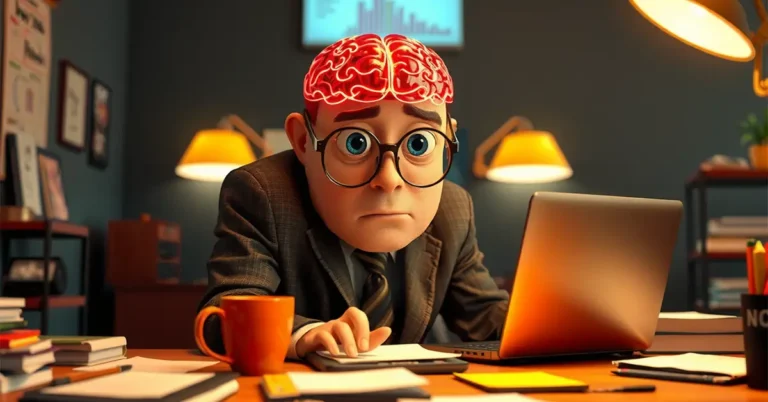


 As your mental energy runs low, your focus weakens. The brain has trouble clearing out old information and loading new details. Instead of a clean switch, some bits from the previous task remain. These leftovers are called “attention residue.“
 The short answer is “no.“