Sustained attention, also known as vigilance, is the ability to maintain focus on a task for a long period. This skill is especially important for activities that need constant monitoring and involve repeating the same mental steps.
For example, listening to a long lecture, watching security cameras, or doing routine work that needs steady attention are all situations that rely on sustained attention.
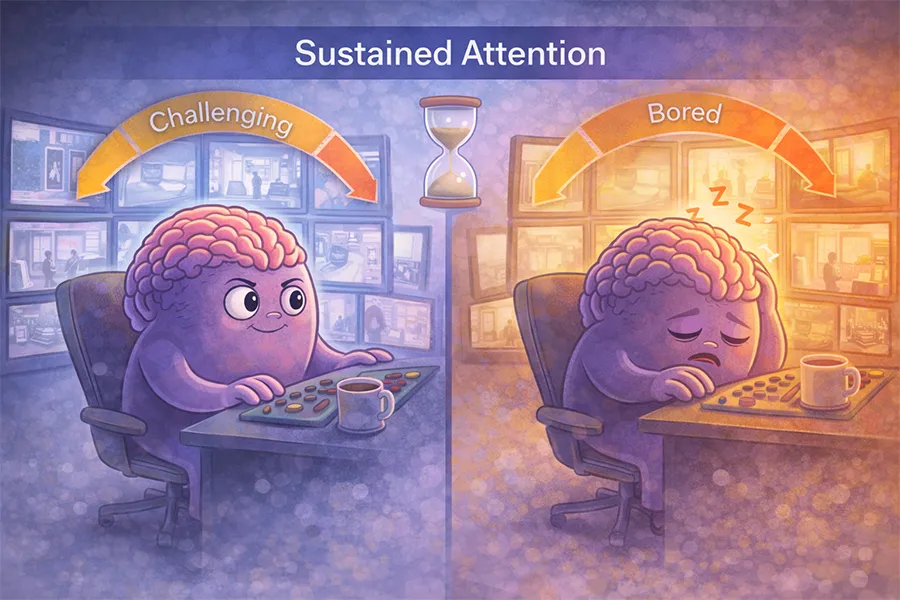 Sustained attention can actually be harder during tasks that require little thought. If a task is too simple or repetitive, the brain is not very stimulated, so it is easier to lose focus. On the other hand, tasks that are a bit more challenging, like learning something new or solving a math problem, can help you stay focused because your brain stays interested.
Sustained attention weakens when a task lasts too long or when you are tired, either physically or mentally. When this happens, your mind may start to wander. If you lose focus early, your overall attention span will be shorter.
Selective attention means choosing what to focus on and ignoring background noise, distractions, or other things happening around you.
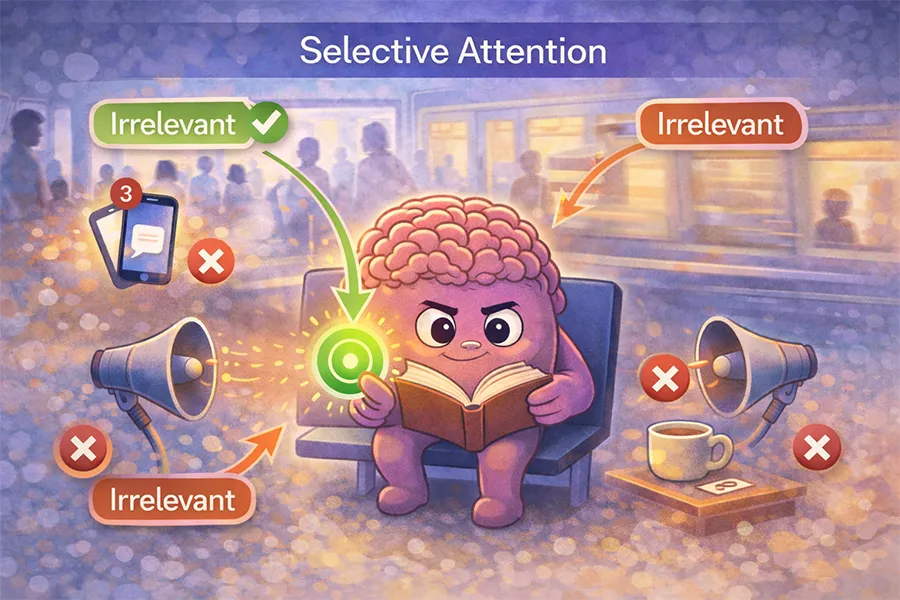 For example, when you read a book while waiting for a train, you use selective attention. Your brain focuses on the story and tunes out the sounds, movement, and other distractions around you.
Selective attention helps you stay focused by automatically blocking out distractions. If it gets weaker, distractions can take over, and your attention may jump to whatever stands out the most.
When someone stops what they are doing to check a notification, it does not always mean they have lost focus. Usually, their selective attention just did not block the interruption.
This is why attention span depends a lot on the situation. People with stronger selective attention can stay focused longer, even in busy or noisy places.
Divided attention means trying to focus on two tasks at once. In this situation, the brain tries to process information from two sources simultaneously.
When you divide your attention, you lose deep focus. Your mind splits its resources between tasks, so you can’t focus well on either one. This makes you perform worse, get tired faster, and become more easily distracted. Your attention span also gets shorter.
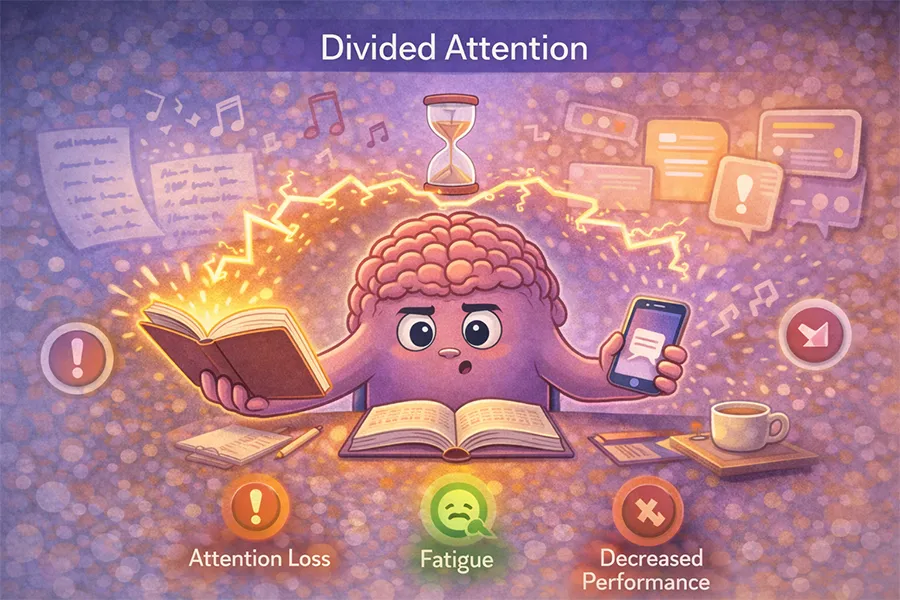 Some examples are reading while listening to music, texting while driving, or quickly switching between two challenging tasks.
Divided attention can sometimes seem to work in certain situations, like when:
- The tasks use different senses, for example, one uses sight, and the other uses hearing.
- Both tasks are easy and don’t require much thinking, or
- One task is something you do automatically, like walking or jogging.
Even in these situations, your attention isn’t really split. Usually, one task takes priority while the other happens in the background.
Divided attention does not work well when:
- Both tasks use the same sense, or
- Both tasks require active thinking, like listening to a podcast while learning a new physical skill.
This explains why multitasking can feel productive, but it really isn’t. Dividing your attention makes you more mentally tired and alert, so distractions get in more easily, and your attention span gets shorter.
Alternating attention is what really happens when we multitask. When two or more tasks need our focus, the brain does not handle them at the same time. Instead, it switches attention back and forth, changing focus to take in new information.
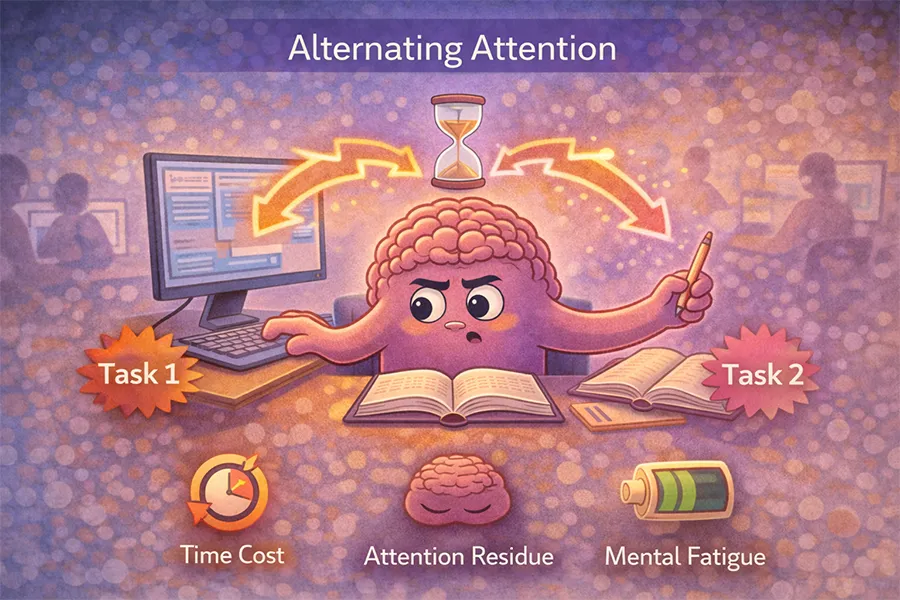 When divided attention is not enough to manage several tasks at once, the brain uses alternating attention. This means it switches focus from one task to another instead of trying to split attention.
Switching between tasks has well-known downsides, such as:
- Time costs: every time you switch, you need to refocus before you can get back to productive work.
- Attention residue: some of your working memory stays on the last task, which makes it harder to think clearly and creatively about the next one.
- Mental fatigue: switching often tires out your brain’s control system, which lowers how well you perform overall
Because of these downsides, your attention span during alternating attention is broken into short bursts, with frequent interruptions as you switch tasks.
This is why multitasking makes it harder for your brain to keep a long attention span. It gets you used to short bursts of focus instead of longer, deeper attention.
Executive attention is the highest level of our attention system. It is the most conscious and controllable type of attention we use.
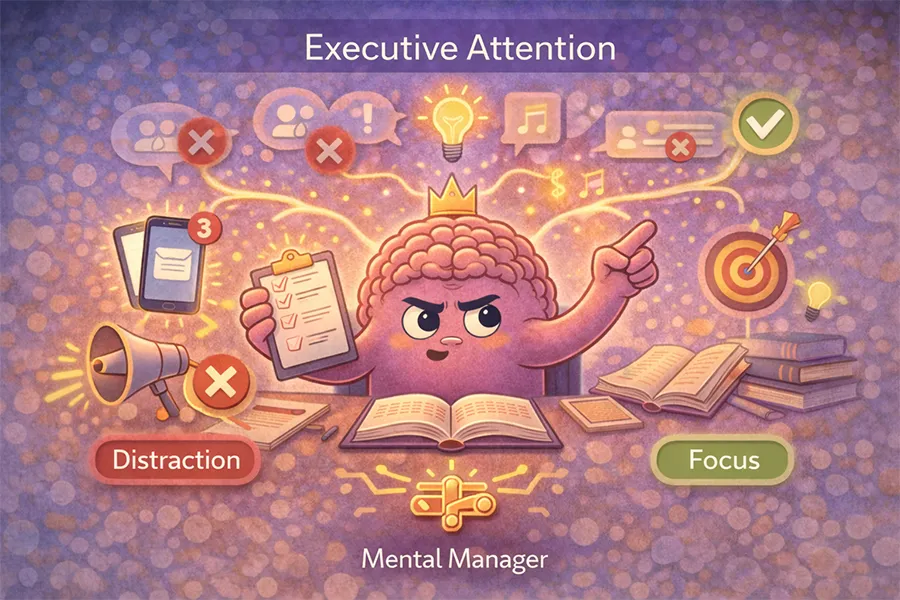 Its main job is to manage the other attention systems. Executive attention works by stopping automatic brain responses that get in the way of focus and by helping attention processes that support your current goal.
When you use executive attention, your mind can:
- keep your goal in mind and return to it often, which helps you stay focused,
- actively ignore distractions that do not help you reach your goal, making it easier to focus,
- choose which thoughts and information are most important, and
- notice when different thoughts or distractions compete for your attention and block out the ones that are not important.
Put simply, executive attention works like a mental manager. It decides where your attention should go and helps you stay focused when distractions arise.
With this control, strong executive attention lets you use your mental energy more consciously. It also helps you switch between tasks or pay attention to more than one thing when needed, without losing focus.
For example, when you study even though you feel tired, resist checking social media, or ignore notification sounds, you are using executive attention.
People with strong executive attention tend to have longer, steadier attention spans. This system is also closely connected to:
- willpower and self-control,
- goal-directed behavior, and
- the ability to resist impulses.
Unlike some other attention systems, you can make executive attention stronger with practice. Activities that train your focus, self-control, and awareness, such as mindfulness, help build this system over time.
So far, we have talked about what attention does. But there is still an important question:
How does the brain make these attention skills possible?
Neuroscience can help us find the answer.
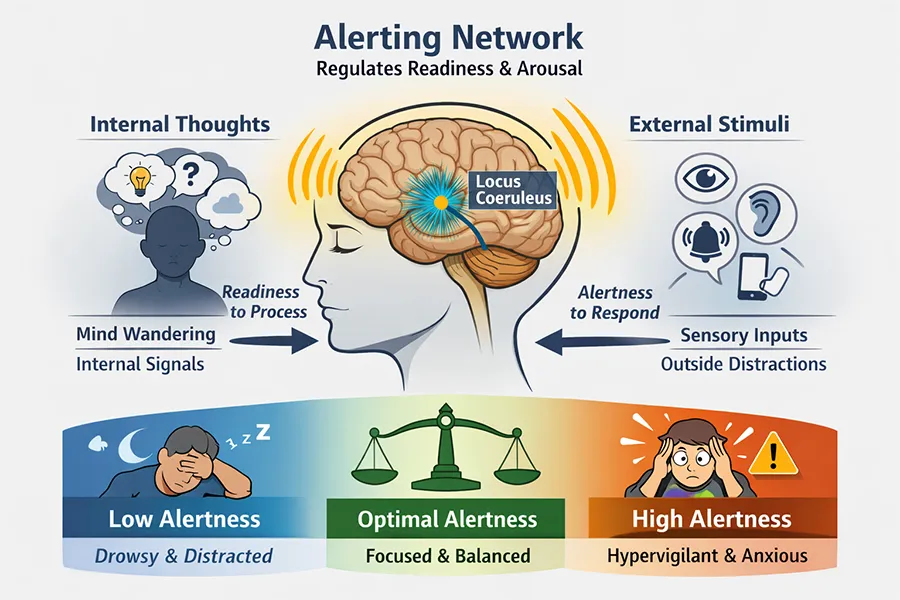 The alerting network helps keep you awake and ready to take in new information. It sets your brain’s baseline alertness, so your attention can work as it should.
This network gets your brain ready to handle tasks, but it also makes you more sensitive to things happening around you. If alerting activity is too low or too high, your attention span can get shorter.
If alerting activity drops too low, your brain becomes less alert. It’s harder to pay attention, your mind may wander, and you might feel bored or sleepy. Being tired, whether physical or mental, often reduces alerting activity.
If alerting activity is too high, your brain becomes overly alert and easily distracted, always on the lookout for potential dangers. This often happens when you feel stressed or afraid, making it very hard to stay focused.
You have the best and most steady attention span when the alerting network is balanced. At this point, your brain is awake enough to stay interested but calm enough to ignore things that don’t matter.
You can’t control the alerting network just by thinking about it. That’s why getting enough rest, managing stress, and keeping your emotions balanced are key to a good attention span, often even more than just trying harder.
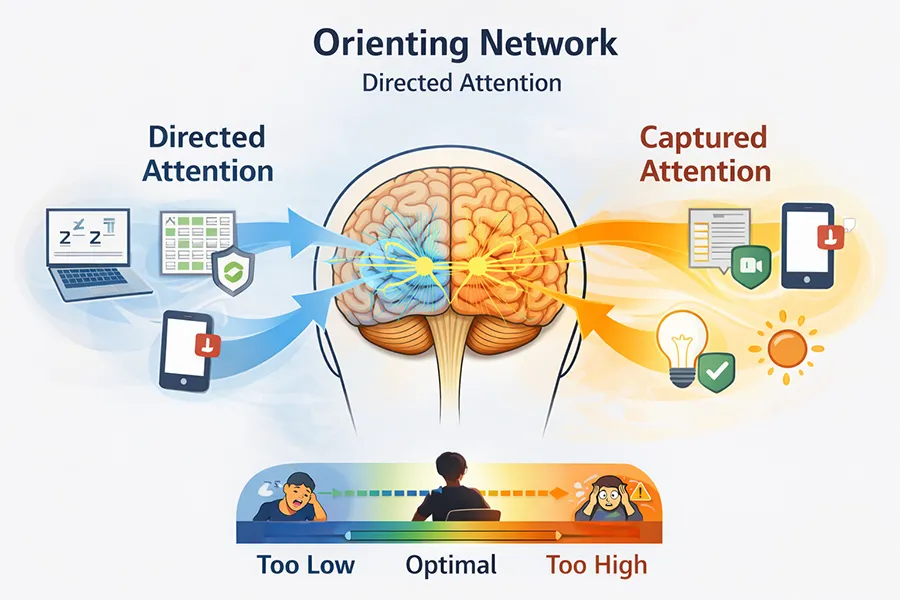 The orienting network helps you focus on what is important right now. It lets you choose to move your attention from one thing to another on purpose.
For example, when you are studying, the orienting network lets you switch your attention between a paragraph, a diagram, or an audio clip, all while staying focused on your study goal.
But it can also draw your attention to unrelated things, like your phone or another task.
Usually, the orienting network is controlled by your own choices, guided by your executive attention (Top-down control). This means you decide where to focus. But sometimes, something sudden, new, or emotional can take over and grab your attention instead (Bottom-up control).
A sudden flash of light, a loud noise, or hearing your name can quickly pull your attention away. This breaks your focus and makes it harder to concentrate for long.
When a task is interesting or requires a lot of thinking, your top-down control gets stronger. This helps block out automatic distractions, so you can pay attention for longer during complex or meaningful work.
The orienting network also relies on how alert you are.
- If you are too alert, distractions feel stronger and harder to ignore.
- If you are not alert enough, it is harder to focus, and your mind may wander.
To maintain your attention span, the orienting network works best when your alertness is just right—not too high or too low.
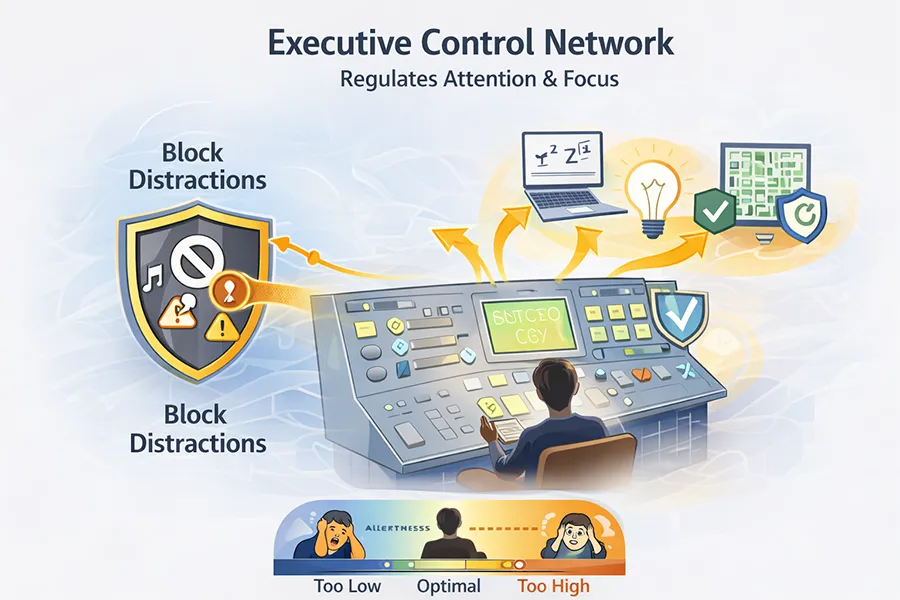 The executive control network is the part of the brain most involved in consciously controlling attention. It lets you choose what to focus on and what to ignore.
This network supports attention by helping the brain to:
- block out distractions that come from automatic attention systems,
- notice when different thoughts or inputs compete and help you focus on what matters for the task,
- adjust your focus in real time if your attention starts to wander, and
- spot mistakes in your thinking or decisions and help you fix them.
Put simply, this network works like the brain’s control center for focus.
One key limitation is that the executive control network cannot directly control the alerting network. You can choose what to focus on, but you cannot force yourself to feel alert if your brain is tired or overstimulated.
This network is especially important when you are doing challenging mental tasks, such as learning something new, solving tough problems, or resisting strong distractions. In these moments, your attention needs to be managed and protected as you go.
Since executive control requires a lot of effort, it can quickly tire. When this happens, your attention span gets shorter, even if you still feel motivated. That’s why getting enough rest and good sleep helps you stay focused.
Even if your attention networks are healthy, your attention span can still vary significantly from moment to moment. This isn’t just about the brain’s structure. It also depends on changes in the brain’s chemical balance, which affect how well these networks function.
Norepinephrine is the brain’s main chemical for arousal and alertness. It helps control how responsive the brain is to new information, making it a key part of the alerting network.
One of its key functions is improving the signal-to-noise ratio. In simple terms, norepinephrine turns up the “volume” of what matters and turns down what doesn’t, helping the brain distinguish relevant thoughts or stimuli from background noise.
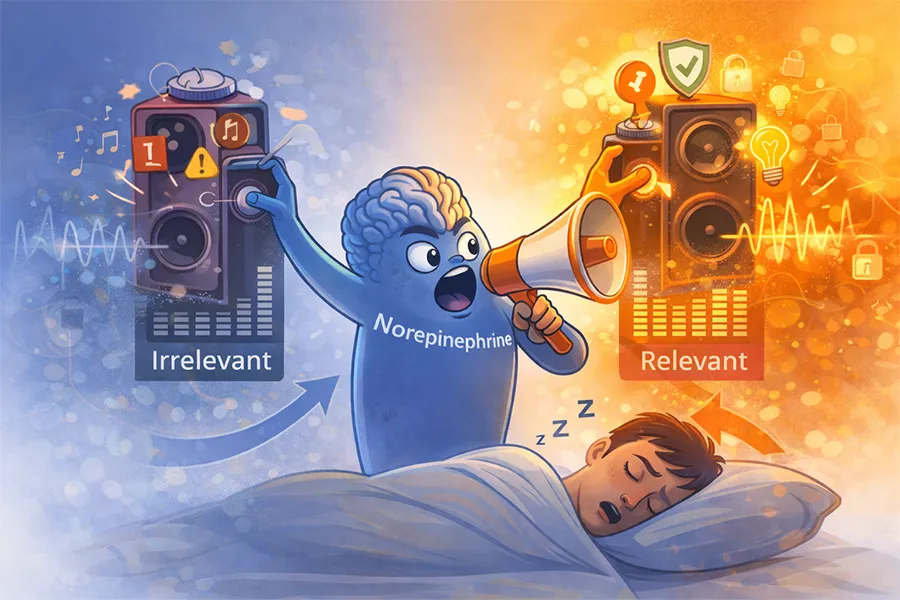 Because of this, norepinephrine has a big effect on how long you can pay attention:
- Too little norepinephrine: The brain becomes less alert. It’s harder to focus, your mind may wander, and you might feel sleepy or bored.
- Too much norepinephrine: The brain becomes overly alert. You notice too many things at once, it’s harder to focus on one thing, and you may feel anxious or easily distracted.
- Balanced norepinephrine levels: Important information is easy to notice, and distractions fade into the background. This helps you stay focused for longer.
This balance is why your attention span gets shorter when you are tired, stressed, or scared. These states move norepinephrine away from its best level.
Dopamine acts as the fuel for executive control. It helps the brain keep track of goals and focus on what is important over time.
One main job of dopamine is to keep goals steady in working memory. It helps the brain hold onto a goal, shields it from distractions, and lets us change the goal when needed.
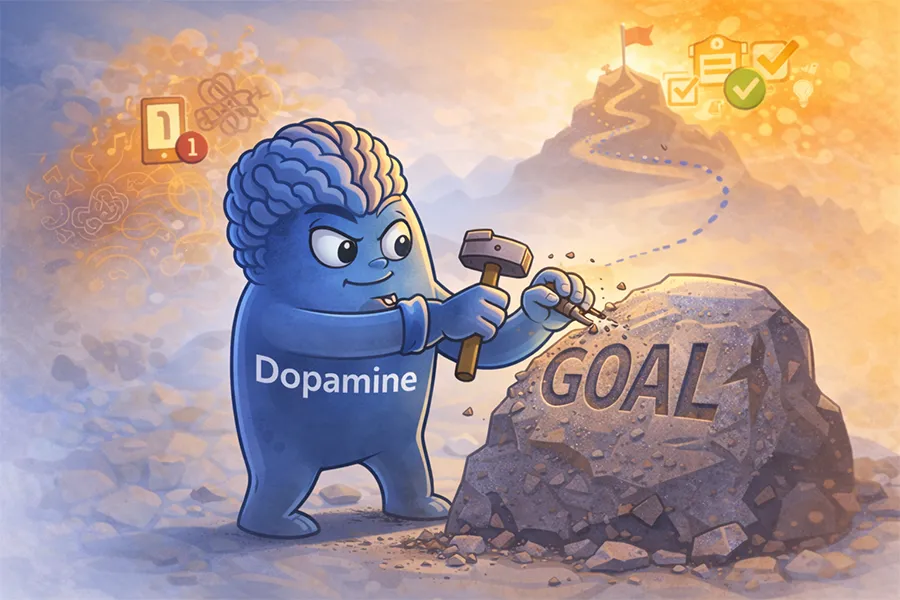 Since executive control relies on dopamine, problems with dopamine can significantly affect attention span.
When dopamine levels are low or out of balance, it becomes hard to:
- keep a goal in mind,
- avoid distractions,
- and stay focused on goals.
This is why people often have shorter attention spans in situations where dopamine is out of balance, such as:
- ADHD,
- addiction, and
- constant digital overstimulation.
In these situations, it is easy to get distracted by quick rewards, so it becomes much harder to stay focused and work toward long-term goals.
Acetylcholine helps the brain process incoming information more accurately. It is important to decide which sensory signals matter and which ones can be ignored before we become fully aware of them.
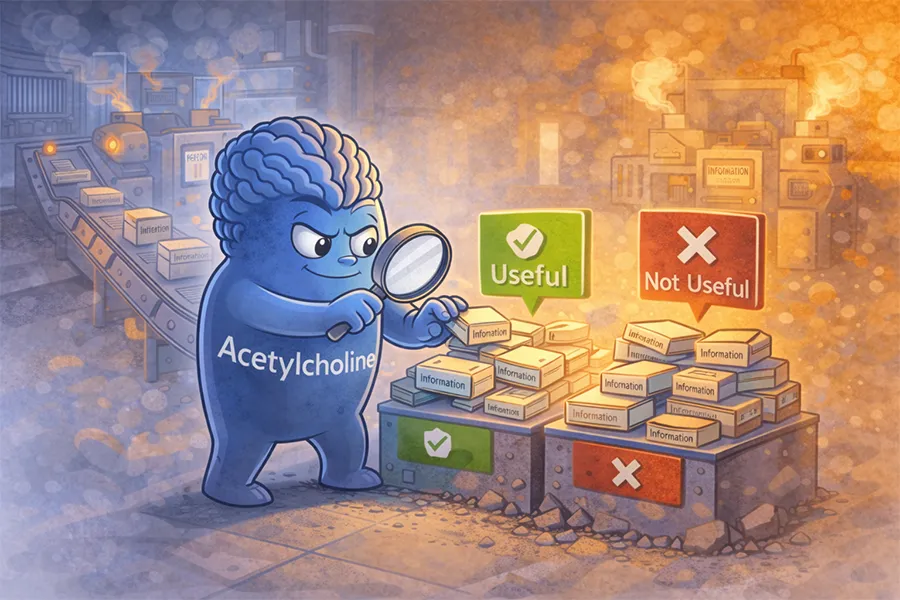 In practice, acetylcholine makes important signals clearer. It boosts useful information and reduces background noise, so the brain can filter out distractions early, before they reach our conscious awareness. This early filtering helps us pay attention more efficiently.
By reducing unnecessary information that reaches our awareness, acetylcholine makes it easier for our attention systems to function. This means we do not have to try as hard to stay focused, and it is easier to maintain attention span for longer.
Adenosine is a chemical that builds up in the brain as a natural byproduct of energy use. The longer you stay awake and the more mentally demanding your activities are, the more adenosine collects.
As adenosine levels go up, you start to feel more:
- sleepy,
- physically and mentally tired, and
- mentally worn out.
 When adenosine levels are high, they make it harder for your brain to stay alert by inhibiting the alerting network. As you become less alert, it gets tougher to pay attention for long periods, and your attention span gets shorter.
That’s why your attention span is usually much shorter after a long, tiring day or when you haven’t had enough sleep.
Sleep clears away the adenosine that has built up in your brain, helping you feel alert again and making it easier to focus for longer. Caffeine helps by blocking adenosine receptors for a while, so you feel less tired, and your attention span improves for a short time, but it doesn’t actually remove the adenosine.
When the brain’s chemicals are balanced and support your attention, it’s easier to stay focused and your attention feels steady.
Knowing about this change helps explain why our attention span can fall apart in real life, even if we still feel motivated.
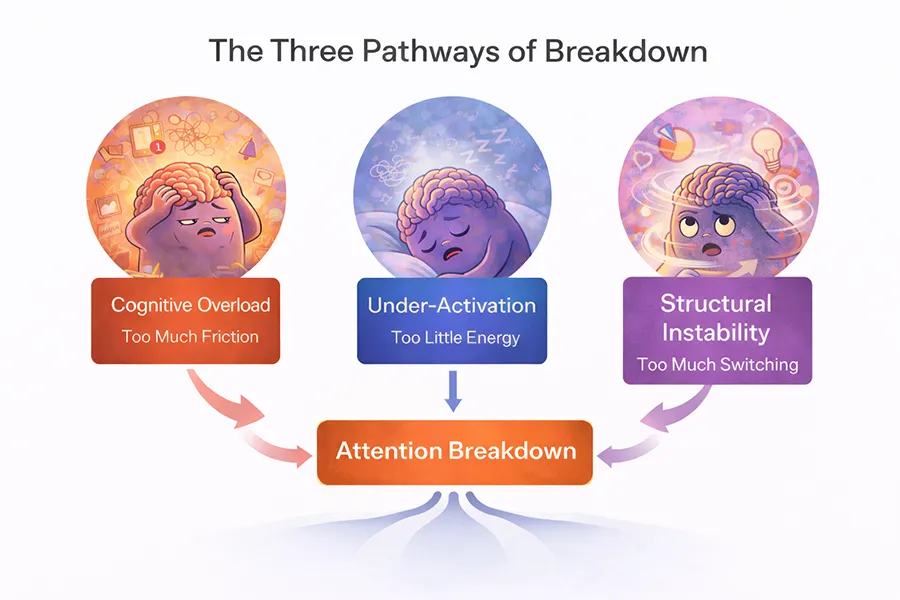
Attention usually breaks down in one of three main ways.