Humans aren’t made for multitasking. When you try, you’re not really doing several things at once. Instead, you’re quickly switching from one task to another. Each switch splits your attention, uses up mental energy, and weakens your brain’s focus.
Deep, sustained focus strengthens your brain. Regular multitasking does the opposite. It provides focus-related areas with less stimulation, so they shrink over time, in line with the rules of neuroplasticity.
Think of neuroplasticity as your brain’s ongoing remodel, where it strengthens the areas you use most and lets others shrink back if they’re rarely engaged. This leads to long-term, but reversible, problems with how your brain works.
By the end of this guide, you’ll be able to understand:
- How the brain responds to multitasking
- How multitasking reshapes your brain structurally
- Whether these changes are reversible

- Multitasking weakens focus and changes brain structure over time.
- Deep focus habits can reverse multitasking’s negative brain effects.
- Simple daily practices help rebuild attention and mental clarity.
How the Brain Responds to Multitasking
Your mind gives the orders, and your brain follows. When you try to multitask, you’re asking your brain to do something it can’t do well without losing performance.
Multitasking spreads your attention over several things, making your focus jump quickly from one to another. This task-switching takes a toll. Each time you switch, your brain has to clear out the last task and bring in new information. Because working memory is limited, you can’t keep two sets of information in mind at once.
If you practice task-switching enough, the brain’s connections for deep focus and engagement weaken, while those for multitasking sharpen.
Take a moment to reflect: how often do you feel a ‘mental residue’ after switching tasks? This can manifest as leftover clutter in your mind, making it difficult to return to a deep focus state. Over time, your brain gets better at switching tasks but loses the ability to focus intensely without interruption.
Why Multitasking Affect Your Brain
 Constantly switching tasks lowers your performance, makes you more irritable, and stops you from focusing deeply enough for healthy brain changes.
Here’s why that happens biologically: If you rarely use deep focus, your brain adapts by shrinking focus-related areas and weakening attention pathways.
This is the basic idea of ‘use it or lose it’ in neuroplasticity. Brain areas you use often get stronger and grow, while those you don’t use start to fade.
So which regions are affected?
Multitasking Related Brain Changes
Multitasking disrupts your brain in three major ways:
- Drains energy.
- Reshapes structures.
- Triggers stress.
Let’s look at how it happens.
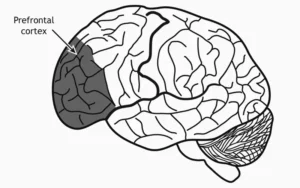
1. Thinning of the Prefrontal Cortex (PFC)
 The prefrontal cortex is the command center for attention, decision-making, impulse control, and working memory.
If you multitask all the time, you don’t use your PFC as much. Over time, this part of your brain gets smaller, and its connections get weaker.
This results in:
- Shorter attention span
- Impaired impulse control
- Lower-quality analysis and planning
2. Thinning of the Anterior Cingulate Cortex (ACC)

The ACC helps you pay attention, spot mistakes, and sort out conflicts. You can think of it as your brain’s supervisor.
Consequences include:
- Fragmented attention
- More unnoticed mistakes
- Faster mental fatigue
- A baseline of distraction
3. Shrinking of the Hippocampus
 The hippocampus is essential for learning and long-term memory. Deeply focusing on it activates it and helps you form lasting memories.
Studies show that deep focus helps you form strong memories. (Crawford et al., 2011)
If you multitask a lot, your hippocampus doesn’t get enough deep engagement, so it slowly shrinks.
Common effects:
- Poor memory retention
- Shallow learning
- “I studied this… but can’t recall the details.”
4. Increased volume and reactivity of the Amygdala

When the focus-related areas become inactive due to boredom, the amygdala, which controls emotions and stress, starts working overtime.
Multitasking puts your brain under constant strain. When the prefrontal cortex gets weaker, it can’t control the amygdala as well.
This makes the amygdala more reactive, like an alarm that keeps sounding even when there’s no real problem.
This leads to:
- Stronger emotional reactions
- Lower frustration tolerance
- Cognitive exhaustion
- Higher cortisol levels
5. Overactive Default Mode Network (DMN)
While focus-related brain regions are resting, the brain’s Default Mode Network takes over. DMN is a complex network connecting different brain regions that becomes active when you are not actively focusing. Activation of the default Mode Network causes mind-wandering and daydreaming.
Activity and connectivity of this region are strengthened by frequent usage in a multitasking community, causing:
- Frequent mind-wandering
- Weakened focus circuits
- Difficulty staying mentally grounded
6. Reduced White Matter integrity
 White matter is the brain’s communication wiring. Strong myelination supports fast, synchronized information flow.
Focusing deeply makes these pathways stronger. But if you multitask a lot, you don’t use them enough, so the myelin gets weaker and signals travel more slowly.
It’s similar to swapping out fast fiber-optic cables for old, slow copper wires.
This leaves your brain overstimulated but not well-connected. You’re always busy but rarely fully focused. You’re always active but not really present.
How Long Does It Take for Multitasking to Change the Brain?
Feeling tired, confused, or drained after one or two busy days doesn’t mean that your brain has structurally changed. Brain changes are gradual and can take a long time. Multitasking as a long-term habit can lead to these brain changes.
But the point is that if you are already multitasking, that habit can harm your brain in the long run. Long-term habits are difficult to change at once. That’s why it’s paramount important to change your multitasking habit as early as possible.
Are Feeling Drained and Tired Signs of Multitasking-Related Brain Changes?
No, don’t take it the wrong way. Feeling tired, stressed, or drained after a heavy day is normal, especially if work is cognitively challenging. But multitasking makes it worse. Multitasking for 1 or 2 weeks, or even 1 or 2 months, isn’t going to change your brain for the worse. But the habit of multitasking does.
One thing to remember is that feeling excessively drained or tired after a normal working day can be a sign of a strained brain from multitasking. Because task-switching demands excessive resources, you may feel drained at the end of the day after finishing your day’s duties.
These will not be permanent as long as you do not multitask habitually.
The brain changes described in this article are not caused by multitasking alone. Many other factors — including chronic stress, poor sleep, mental health conditions, medical issues, substance use, and long-term lifestyle patterns — can produce similar effects on attention, memory, and emotional regulation.
The information here is educational, not diagnostic.
If you’re experiencing significant cognitive or emotional difficulties, consider speaking with a qualified healthcare professional to gain a clearer picture.
Are Multitasking-Related Brain Changes Permanent?
Luckily, the answer is no. Neuroplasticity can work in both directions. The same process that weakens unused brain circuits can also make them stronger again.
Let me share a success story that might inspire you:
Emily, a devoted multitasker for years, noticed her focus slipping and frustration mounting. Deciding to change her habits, she switched to single-tasking, gradually reducing distractions. In six months, Emily reclaimed her deep focus, noticed improvements in her memory, and felt more at ease in stressful situations.
This transformation is possible for anyone willing to commit to change. If you build good habits, focusing on one thing at a time and practicing deep focus can undo the brain changes caused by long-term multitasking.
Age doesn’t stop you from improving. Whether you’re in your 30s or your 80s, your brain can still change. You might improve at different speeds, but the potential is always there.
These habits help move your brain from scattered attention to clear, focused work on one thing at a time.
5 Simple Daily Habits To Rebuild Focus and Reverse Multitasking Effects
These habits help move your brain from scattered attention to clear, focused work on one thing at a time.
1. Turn off digital noise
Notifications hijack your attention. Silence them during work blocks.
Connect these focus blocks to a meaningful goal, such as completing a long-term project or mastering a new skill.
By linking your 20 to 30-minute sessions to broader aspirations, you give your focus a clear purpose, turning each block into a step toward personal or professional growth.
2. Finish one task before starting another
Whenever you actually finish something, your brain gives you a little reward—a shot of dopamine (that’s the stuff that helps you feel focused and motivated). Each time you see a task through to the end, you’re teaching your brain to stick with things instead of jumping around.
Doing this over and over helps your brain get better at staying focused, and you’ll notice you don’t feel like bouncing between tasks so much.
Pick something, finish it, take a short breather, then move on. This one simple habit can take you from scattered to locked-in.
3. Work in 20–30 minute focus blocks
Short bursts of focus work way better for your brain than marathon sessions.
Pick something to work on, shut out distractions, and let yourself dive in—but only for as long as it feels doable.
Here’s why these focus sprints help:
- They keep your brain from getting tired and frazzled as it does with long, endless work sessions.
- They help your mind stay sharp and avoid overload.
- You’ll slowly build up your focus muscles—just like getting stronger in the gym.
If deep work is new to you, start with 20 minutes. As you get used to it, you’ll notice you can go longer without even trying.
4. Practice 5 minutes of mindfulness daily
Think of mindfulness as a chill workout for your attention. Spending just five minutes on it each day actually helps your brain focus better and keeps your stress in check, so you feel more in control of your mood and thoughts.
Here’s what a quick mindfulness break can do:
- You’ll spot when your mind starts to wander.
- You can bring your focus back—no need to beat yourself up about it.
- It clears out some of that mental clutter.
- You’ll head into work feeling a little more settled.
What matters most is doing it regularly, not for how long. Five minutes a day will do your brain way more good than one long session every week.
5. Slow down everyday activities
All the little things you do every day—walking, eating, tidying up, even taking a shower—are actually secret ways to practice paying attention.
If you slow down and actually notice what you’re doing, you’re teaching your brain to stay present (without having to try so hard).
Making this tiny change helps:
- Dial down that background stress.
- Help you stay focused even when things are simple or boring.
- Make you more aware of how you’re really feeling.
- Help your mind and body settle down and feel calmer.
These little pauses are like mini pit stops for your brain.
Instead of racing through your day on autopilot, you’re teaching your brain to feel clearer, steadier, and more present—just by slowing down and paying attention, one ordinary moment at a time.
How Long It Takes to Rebuild Focus
- 7-8 days: Less mental noise, more calm. Quick self-quiz: “On a scale from 1 to 10, how overwhelmed do I feel today compared to last week?” Note any changes in your mood or thought clarity.
- 2-3 weeks: Longer focus endurance. Journal prompt: Reflect on a task you completed without distractions. How did it feel compared to when you first started?
- 4-8 weeks: Better memory and clarity. Quick self-quiz: “Am I remembering tasks and conversations better?” Consider noting specific examples of improved memory in a journal.
- 8-12 weeks: Noticeable improvements in brain-network function. Journal prompt: Think about a complex problem you’ve recently solved. How has your approach changed over the past few weeks?
Want to see your progress and make single-tasking stick?
Just grab a calendar and mark off every day you focus on one thing. Do this for 30 days straight—you’ll actually see your streak grow, which makes it way easier to stay motivated.
Multitasking: Take Home Message
Multitasking doesn’t mean you’re productive. It usually means your brain is overwhelmed. The more you divide your attention, the more chaotic your mental world becomes. But the opposite is also true.
Every time you focus on one thing, every focused minute and steady breath, you strengthen your brain’s clarity. Your brain can adapt. With the right habits, you can rebuild focus, find calm, and become more present.
Your attention is your most valuable currency
Spend it wisely
Choose focus, reclaim clarity.
References
Frequently Asked Questions (FAQs)


 Constantly switching tasks lowers your performance, makes you more irritable, and stops you from focusing deeply enough for healthy brain changes.
  The prefrontal cortex is the command center for attention, decision-making, impulse control, and working memory.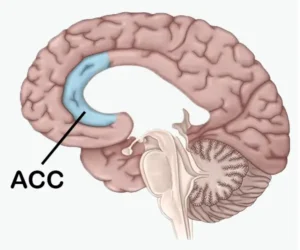
 The hippocampus is essential for learning and long-term memory. Deeply focusing on it activates it and helps you form lasting memories.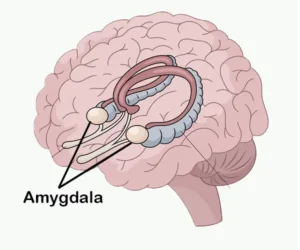
 White matter is the brain’s communication wiring. Strong myelination supports fast, synchronized information flow.